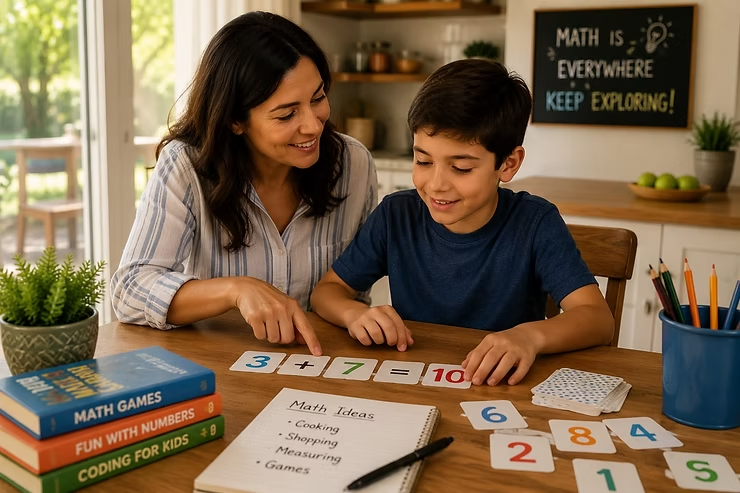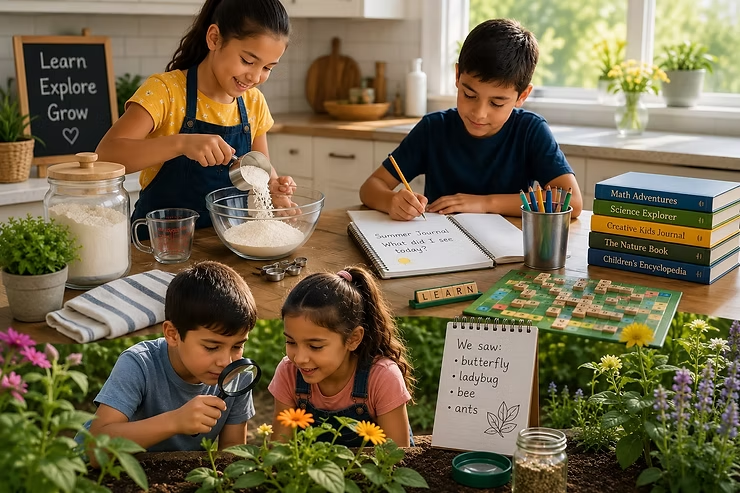

Summer break is supposed to feel lighter for families, but I see a familiar pattern every year as a private tutor: kids return in the fall a little less confident in math, and needing time to “rebuild” skills they already had in May. The goal isn’t to recreate school at home—it’s to use summer math tips for elementary students that keep skills active in simple, realistic ways.
Why Math Skills Slip Over the Summer
Math is cumulative. When practice stops completely, skills like multiplication facts, fractions, and problem-solving don’t disappear—but they get less automatic. That loss of fluency is what makes fall work feel harder than it should.
As education researcher Dr. Harris Cooper notes, “Students score lower on standardized tests at the end of summer vacation than they do on the same tests at the beginning of summer vacation.” This gap is often called the summer slide.
Simple Summer Math Tips for Elementary Students
The most effective approach is consistency over intensity. You do not need worksheets or long sessions. Just 10–20 minutes a day makes a meaningful difference.
One summer, I worked with Jeff who struggled with multiplication facts. Instead of formal drills, his family started turning grocery shopping into quick mental math games—estimating totals, comparing prices, and rounding numbers. By August, his confidence had noticeably shifted.

Here are simple strategies that work:
- Use everyday routines (cooking, shopping, budgeting) as math practice
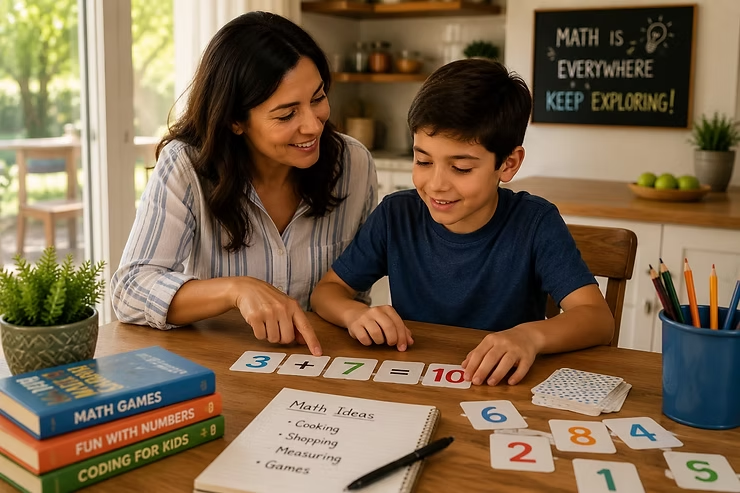
- Play math-based games like dice, cards, or board games
- Practice short “math moments” daily instead of long sessions
- Strengthen fact fluency through quick, low-pressure review
- Use visual learning (drawing arrays, fractions in food, measuring)
Literacy and learning expert Dr. Marilyn Jager Adams emphasizes that skill development depends on repeated meaningful exposure, not isolated practice—principles that apply strongly to math learning as well.
Looking for fun tools to reinforce these skills?
For websites and free learning apps that we recommend, check out our previous blog on how to conquer math homework like a hero!
Keep Math Low-Stress, Not High-Pressure
Children learn best when math feels natural, not forced. The goal is confidence and familiarity, not perfection. Missed days are okay—what matters is staying connected to numbers in real life.
A Simple Next Step for Busy Parents
If your child struggles with math confidence or needs more structured support, summer is actually an ideal time to strengthen skills without school-year pressure. Unboggle offers personalized math tutoring and enrichment in Houston and online designed to build confidence through simple, targeted instruction.
A small amount of consistency now can make a major difference when school starts again.
Ready to help your child feel more confident in math before the new school year begins? Contact Unboggle Learning today for a free personalized consultation. Together, we can build strong math skills through simple, stress-free learning.

Andranise Thomas, M.Ed. is an educator, learning specialist, and the founder of Unboggle Learning. Dedicated to empowering students and partnering with parents, she provides tailored, one-on-one academic support designed to help every child thrive and reach their full potential.